



Quick answer: In New York City, the renovations that reliably raise appraised and resale value are the ones that close the gap between your apartment and the best comp in your building, done with proper permits and board approval. That means modernized kitchens and bathrooms, smarter layouts, updated systems, and finishes that are coordinated and consistent throughout, not renovated piecemeal. National “ROI percentage” lists built around garage doors and vinyl siding don’t translate to a 4th-floor co-op on the Upper West Side. What translates is how your apartment compares to the other renovated units in your line, your building, and your neighborhood.
New York homes have built-in appeal from location alone, but that doesn’t tell you which renovations are worth paying for. In a co-op, condo, or brownstone, value comes down to your building’s comps, your board’s rules, and an appraiser comparing your kitchen to others that sold recently in your line.
With over 25 years renovating kitchens, bathrooms, and full apartments across Manhattan, the same questions would get asked from clients planning to sell within the next five to ten years: what’s actually worth spending money on? Below is our honest, NYC-specific answer, from the major structural investments down to the finishing touches that round out a complete renovation.
Schedule your free consultation

Why National Renovation ROI Data Doesn’t Apply Here
Most of the popular ROI lists come from Remodeling Magazine’s Cost vs. Value report, which is built entirely around detached, single-family homes with yards, garages, and roofs you own outright. In that world, a new garage door recoups an outsized share of its cost because it’s cheap, visible from the street, and every buyer understands it instantly.
None of that applies to a Manhattan apartment. You’re not selling curb appeal. You’re selling square footage, light, layout, and finish quality against a specific set of comps that a co-op board’s finance committee or a bank appraiser will pull directly from your building or block. An appraiser comparing your unit to one that recently sold two floors down cares about kitchen condition, bathroom condition, floor condition, and whether the layout works, not whether you replaced a door that doesn’t exist in your apartment.
With that in mind, we encourage clients to weigh every renovation decision against two additional questions:
- Was it done with permits and, where required, board approval? Unpermitted work is one of the single biggest value killers in a co-op or condo sale. More on that below.
- Does it solve a real NYC pain point, such as noise, storage, an awkward layout, or an outdated kitchen in an otherwise updated building, rather than just adding a feature that photographs well?
The Big-Lever Renovations That Actually Move the Needle
Kitchen renovation: still the single highest-leverage project
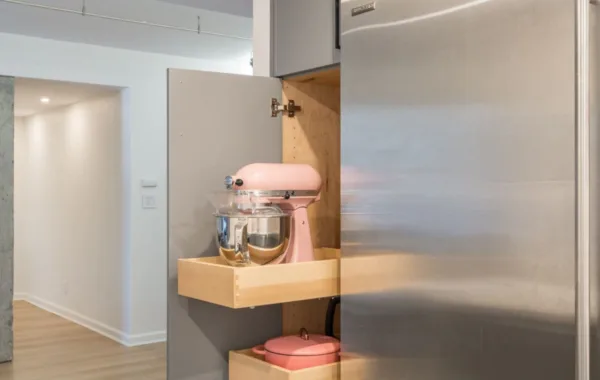
The kitchen is the room buyers and appraisers weigh most heavily, and it’s the room most likely to be dated in NYC’s aging co-op stock. A kitchen renovation that improves the layout, replaces cabinets, and introduces durable, appraiser-friendly countertop materials such as quartz consistently reads as the single biggest upgrade to a unit’s market position.
These considerations matter more in NYC than in a suburban remodel:
- Layout efficiency outweighs square footage. In a prewar galley kitchen, a smarter configuration that adds counter space and storage often makes a bigger difference than any single finish choice. If your kitchen is fully walled off from the living room, it’s worth evaluating whether that wall is load-bearing. Opening the space, or replacing a wall with an island that doubles as a breakfast bar, is one of the highest-impact layout changes available in a typical NYC apartment.
- Consistency with the building’s price point matters. A $150,000 kitchen in a $650,000 co-op won’t return dollar for dollar, since appraisers cap value at what comparable units in the building are achieving. A well-specified kitchen that matches or slightly exceeds your building’s ceiling is the sweet spot.
- Appliances matter more than most homeowners expect. Many NYC apartments are still listed with decades-old stovetops and sinks. Replacing them with energy-efficient, modern fixtures is a relatively modest investment that meaningfully improves how move-in-ready a kitchen feels to a buyer.
Bathroom renovation: the second-biggest lever, especially the primary bath
Bathrooms in prewar and older postwar buildings are frequently the most dated room in the apartment, with original tile, old fixtures, and poor ventilation. A bathroom renovation that addresses waterproofing, ventilation, and a modernized vanity does two things at once: it removes a red flag for buyers (old bathrooms read as deferred maintenance and potential water damage) and it brings the unit in line with what’s selling in the building.
If you only have a budget for one bathroom, prioritize the primary bath over a powder room or guest bath. It’s the one buyers and appraisers scrutinize most closely. A full bathroom renovation is also the right time to address plumbing performance, since weak water pressure or a struggling flush can undermine an otherwise attractive bathroom, and it’s far easier to correct properly while the walls are already open.
Layout changes that add a legal bedroom or fix a dysfunctional flow
In NYC, “bedroom count” is one of the most direct value levers that exists, because listings and comps are organized around it. Converting an oversized living room or a home office into a legal bedroom, complete with a window, proper egress, and permits, can move a unit into a different comp set entirely. This is complex work that requires Department of Buildings filings and, in a co-op or condo, board approval through an alteration agreement, but it’s often the single highest-value structural change available in an apartment renovation.
Systems that buyers can’t see but appraisers and inspectors check
Updated electrical, plumbing, and HVAC don’t photograph well, but they show up in every pre-purchase inspection and every appraisal note. In older buildings, replacing knob-and-tube wiring, upgrading an undersized electrical panel, or adding through-wall or ductless AC where the building allows it removes objections before they surface at contract. We consistently see deals slow down or prices renegotiated over exactly this kind of deferred system work. Addressing it upfront is inexpensive insurance against a lower appraisal or a hesitant buyer.
Full-apartment renovations that unify a piecemeal unit
Apartments that have been updated in pieces over 15 to 25 years, say a renovated kitchen next to an untouched bathroom next to original 1960s parquet, often appraise lower than a unit that reads as cohesively renovated, even if the total dollars spent are similar. A coordinated full-home renovation that brings kitchen, bathrooms, flooring, and finishes onto one consistent standard tends to outperform the sum of its individual upgrades, because it removes the “what else is original in here?” question a buyer or inspector will naturally ask.
Best Renovations by NYC Borough
The core principles (comps, permits, closing the gap with your building) hold citywide, but the housing stock differs enough that priorities shift by borough.
Manhattan: kitchens, bathrooms, and layout, inside a co-op or condo framework
Almost entirely co-ops and condos, so value is set by comps within your line and building. Prewar kitchens tend to be compartmentalized, making layout improvements especially valuable. Nearly every project touches shared systems, so board approval and an alteration agreement are standard, not optional.
Brooklyn: brownstones reward systems and legal configuration
Condos and co-ops follow Manhattan’s logic, but the borough’s defining asset is its brownstone and townhouse stock in neighborhoods like Park Slope, Cobble Hill, and Bedford-Stuyvesant. Value here depends on systems, façade condition, and whether the unit configuration is legal, more than on finishes alone. Gut renovations typically run $450 to $750 per square foot, and converting a legal multi-family to single-family (or the reverse) can shift the buyer pool entirely, so decide early with your architect.
Queens: curb appeal and exterior work genuinely pay off here
The one borough where national ROI lists apply fairly directly, since much of the stock is detached and semi-detached one- and two-family homes. Top-performing neighborhoods like Belle Harbor and Douglaston fit this profile. Exterior condition, roofing, and a finished basement or attic carry real weight alongside kitchen and bathroom work.
The Bronx: renovating dated stock in a fast-appreciating market
Neighborhoods like Norwood and Concourse have posted double-digit annual price gains, while much of the co-op and one- to four-family stock hasn’t been updated in decades. A well-executed kitchen, bathroom, and systems renovation creates a bigger gap against dated comps here than in boroughs where renovated units are already common.
Staten Island: the borough where classic ROI advice holds up
The most suburban borough, dominated by single-family detached homes, so exterior-focused advice (curb appeal, roofing, siding) genuinely applies here more than anywhere else in NYC. Turnover is the highest in the city, but appreciation is moderate, so budget carefully rather than assuming an oversized return. Kitchens and bathrooms still matter most.
The NYC-Specific Factor That Erases Value: Unpermitted Work
This is the one that doesn’t show up on any national ROI list, and it’s arguably the most important item on this page.
In a co-op or condo, work done without the proper permits and board sign-off doesn’t just fail to add value. It can actively subtract it. Buyers’ attorneys and lending banks now routinely ask for proof that renovation work was filed and closed with the Department of Buildings, and for the building’s alteration agreement and any related sign-offs. Unpermitted plumbing moves, unpermitted electrical work, or a “bedroom” that was never legally created can:
- Kill a mortgage approval outright, since banks won’t lend against work that isn’t properly documented
- Force a seller to file for retroactive permits or even undo work before closing
- Give a buyer’s attorney leverage to renegotiate the price at the eleventh hour
This is exactly why the renovation firm you choose matters as much as the finishes you choose. A firm that manages permits, board approvals, and alteration agreements as part of the renovation, rather than treating them as the homeowner’s problem, is protecting your resale value, not just your finishes.
At NYKB, that’s the role we play on every project, from a single kitchen to a full-apartment renovation. We handle design, permitting, board paperwork, and construction all under one roof, so nothing gets lost between separate contractors. We work within your actual budget rather than upselling features you don’t need, and because we stay current on materials, layouts, and finishes, you’re getting the latest options that suit your building’s price point, not choices that feel dated by the time you sell.
A Simple Framework for Prioritizing Your Budget
If you’re renovating with resale in mind, work through it in this order:
- Fixing anything that would fail an inspection or block financing, such as outdated wiring, active leaks, illegal layouts, or unpermitted prior work.
- Renovate the kitchen and primary bathroom, the two rooms comps and appraisers weigh most heavily.
- Address layout inefficiencies, especially anything that could plausibly add a bedroom or usable room.
- Unify finishes across the apartment so it reads as one cohesive renovation rather than a patchwork.
- Confirm everything is properly permitted and closed out before you list, so a buyer’s attorney or lending bank has nothing to flag.
Each of these decisions is easier to make with someone who has reviewed your building’s comps, your board’s alteration agreement, and what similar renovations have actually returned at sale. That’s exactly the conversation our design consultations are built around, before a single wall comes down.
Frequently Asked Questions
Will renovating my apartment increase my property taxes? In most cases, no, not directly. NYC co-op and condo property taxes are based on assessed value formulas tied to income and expense data or comparable rentals, not on your individual renovation spend, so a kitchen or bathroom upgrade typically doesn’t trigger a reassessment the way it might for a single-family home in other parts of the country. Major structural work filed with the Department of Buildings can occasionally affect a unit’s classification, so it’s worth asking your renovation firm to flag anything that might.
Should I renovate before listing, or sell as-is and let the buyer adjust their offer? It depends on your building’s comps. If similar renovated units are selling well above dated ones in your line, renovating first usually nets more than the discount a buyer would apply for an “as-is” unit, since buyers tend to overestimate renovation costs and underbid accordingly. If your building’s price ceiling is low relative to renovation costs, or your timeline is tight, selling as-is and pricing accordingly can be the smarter move. We can walk through both scenarios with you before you commit either way.
What does a free NYKB design consultation include? We walk your apartment in person, review your building’s recent comps and any board or alteration agreement requirements specific to your address, and talk through which renovations make sense for your budget and timeline. You’ll leave with a clear sense of scope and next steps before any design work or contracts begin.
Does NYKB take on projects in all five boroughs? Yes. While a large share of our work is in Manhattan, we also renovate brownstones, townhouses, and apartments in Brooklyn, Queens, the Bronx, and Staten Island. We tailor our approach to each borough’s housing stock and board or DOB requirements accordingly.
Ready to determine which renovations make the most sense for your building and comps? Book a free design consultation with NYKB, and we’ll walk your apartment with you before recommending a single upgrade.