
When remodeling a New York City apartment, lighting is easily one of the most overlooked design elements yet, it has the power to completely transform how a space feels and functions. In a city known for narrow Manhattan galley kitchens, deep Brooklyn brownstone layouts, and structural concrete ceilings, relying on standard fixtures won’t cut it. The right lighting strategy can instantly make a compact room feel twice its size, highlight high-end finishes, and completely shift the mood of your home.
At NYKB, we design full-home, kitchen, and bathroom renovations around the reality of city living. That means compensating for limited natural light, working within rigid building restrictions, and planning layouts that maximize every square inch.
Why Lighting Matters in NYC Apartments
In a sprawling suburban home, a single central ceiling fixture might suffice. In an NYC apartment, it is a recipe for dark corners and harsh shadows. Because neighboring buildings, small window exposures, and deep pre-war floor plans often block out natural sunlight, strategic artificial lighting is essential to make a home feel welcoming.
According to NYKB founder Perry Hiiman, a successful urban lighting plan relies on two main principles: layering different types of light to eliminate shadows, and understanding physical building constraints before buying fixtures. Proper positioning is just as critical as the style of the fixture itself; a beautiful light placed in the wrong spot can actually make a compact room feel smaller and more enclosed.
Best Kitchen Lighting Ideas for Compact Layouts
Transform your bathroom into a serene sanctuary with our expertly crafted lighting solutions. Whether you’re getting ready for the day ahead or unwinding with a relaxing bath in the evening, the right lighting can enhance your bathroom experience.
NYKB offers a variety of lighting options for your bathroom, including vanity lights to ensure optimal visibility for grooming tasks, ambient lighting to create a soothing atmosphere, and decorative fixtures to add a touch of glamour to your space. Let us illuminate your bathroom oasis and turn your daily routine into a spa-like retreat.
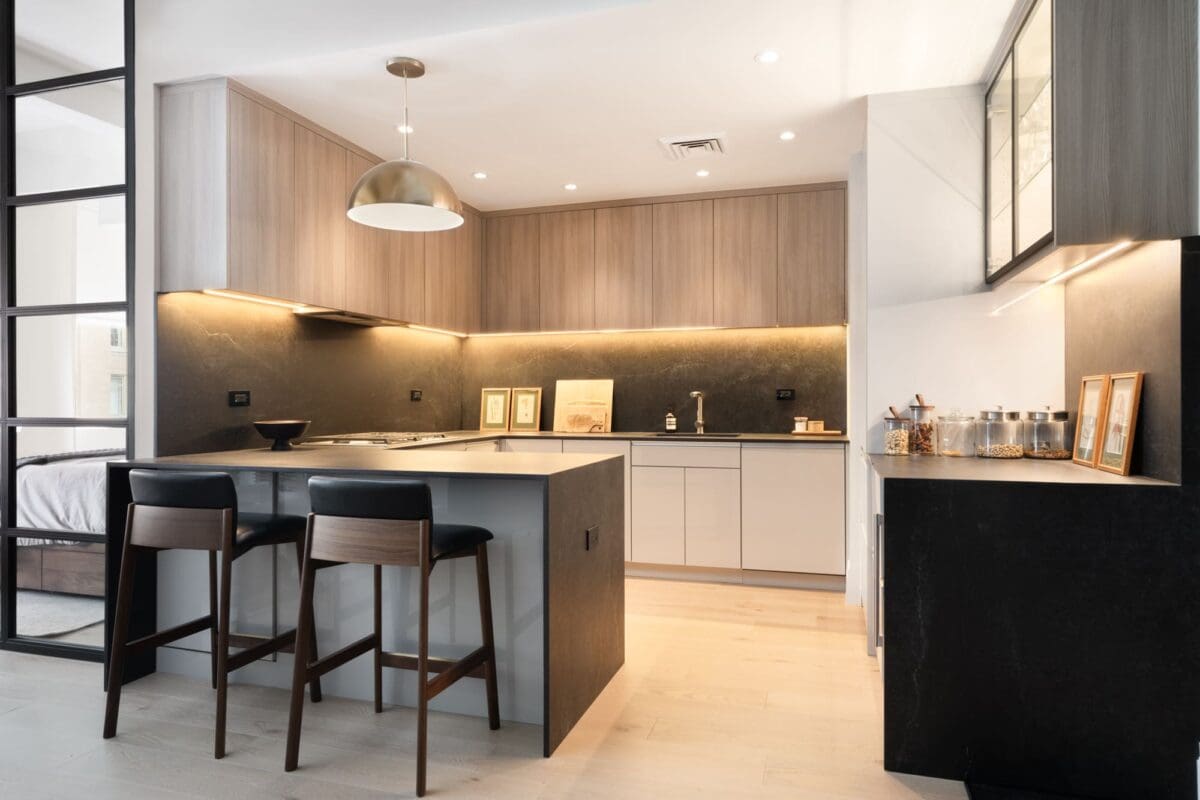
Kitchens are high-utility spaces that require exceptionally clean, bright visibility. When dealing with limited square footage or long, narrow layouts, a layered lighting strategy is your best asset.
1. Recessed Lighting (The Ambient Base)
Recessed ceiling lights, often called “can lights”, are the ideal foundation for small kitchens because they provide clean, even illumination without taking up any visual space. They keep the ceiling line completely flush, which prevents a small kitchen from feeling crowded.
The NYC Structural Hurdle: Many modern condos and co-ops have solid concrete ceilings, making it impossible to cut holes for standard recessed lights. In these situations, we build out a shallow, dropped drywall soffit (a lowered section of the ceiling) to house the architectural wiring, or we utilize ultra-thin, low-profile surface mounts that mimic the look of recessed lighting without requiring deep ceiling cavities.
2. Under-Cabinet LED Lighting (The Core Task Light)
Upper cabinetry is notorious for blocking overhead light, casting dark shadows directly across your countertops where you cook and prep food. Installing low-profile LED under-cabinet strips solves this immediately. They offer highly efficient, focused brightness exactly where you need it, while adding a high-end, polished feel to your kitchen finishes.
3. Focal Pendant Lighting
Pendant lights are an excellent way to introduce personal style, but in an apartment, they serve an architectural purpose, too. In open-concept apartment layouts, hanging a set of pendants over a kitchen island or a peninsula helps define the kitchen as its own distinct zone without adding physical walls that block light and views. The key here is scale – choosing fixtures that complement the room’s proportions without overpowering the ceiling height.
Optimizing Bathroom Lighting for a Clean, Luxury Feel
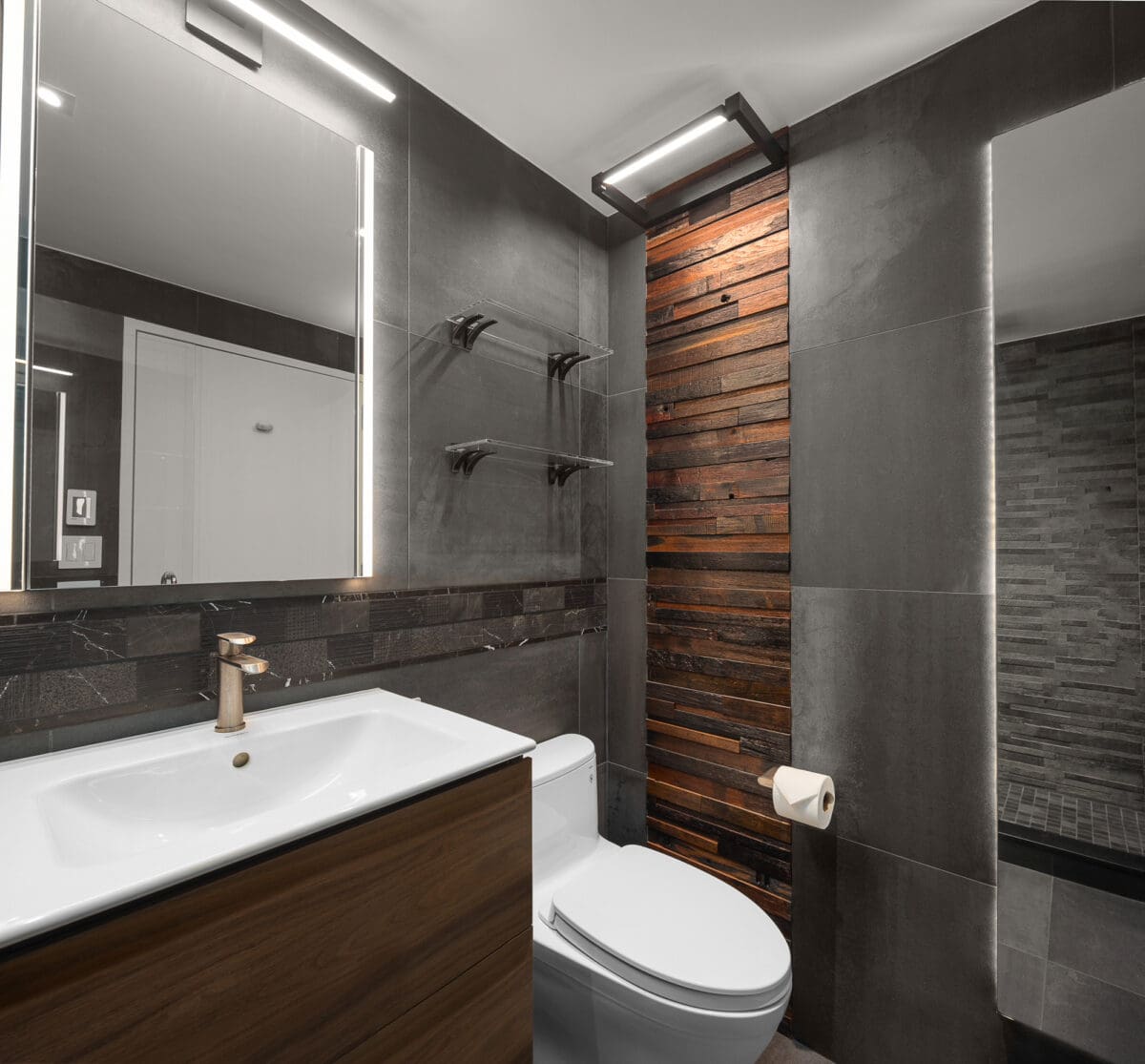
NYC apartment bathrooms are often naturally dim, internal rooms without windows. A smart lighting plan balances highly functional task lighting for your morning routine with soft, relaxing options for winding down at night.
Shadow-Free Vanity & Mirror Lighting
Relying solely on a single overhead ceiling light is the most common mistake in bathroom renovations. It casts harsh shadows downward across your face, making everyday tasks like shaving, skincare, or putting on makeup incredibly difficult.
To achieve clean, flattering light, you need illumination at eye level. Symmetrical vertical wall sconces mounted on either side of the mirror or a modern LED backlit mirror will distribute light evenly across your face, erasing shadows completely. In tight Manhattan apartment bathrooms, integrated smart mirrors are incredibly popular because they save valuable wall space while delivering premium brightness.
Layered Ambience & Finishing Touches
To prevent a windowless bathroom from feeling sterile, add layers of light that you can adjust based on the time of day:
- Dimmable Overhead Recessed Lights: Keep them bright for cleaning and mornings, but dim them low for evening baths.
- Toe-Kick and Niche Lighting: Installing hidden LED strip lights beneath floating vanities (toe-kick lighting) or inside recessed shower niches creates a beautiful, subtle floor-level glow. It highlights the architecture of the room, makes the vanity look like it’s floating, and serves as an ideal, soft nightlight.
- Warm Color Temperatures: Stick to bulbs between 2700K and 3000K. Avoid cool, blue-toned commercial lighting, which can make a small bathroom look institutional rather than relaxing.
Strategic Solutions for Living Areas and Natural Light
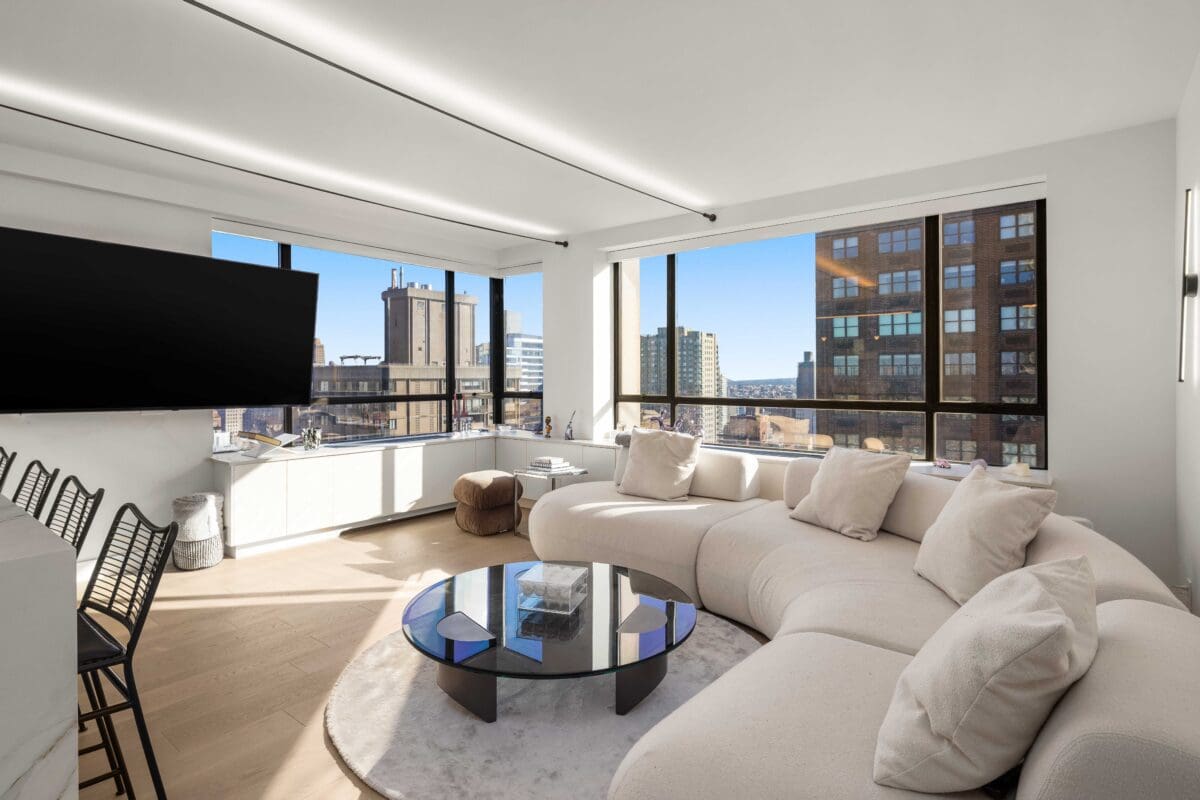
Maximizing light in the rest of your apartment requires a mix of clever electrical solutions and visual design choices.
Flexible Track and Wall-Mounted Sconces
When structural concrete ceilings prevent you from running new wiring for overhead fixtures, two solutions work beautifully:
- Architectural Track Lighting: Modern track systems allow you to run a single electrical feed and position multiple directional spotlights exactly where you need them, aimed at artwork, bookshelves, or seating areas.
- Wall Sconces: Mounting sconces in bedrooms, hallways, and living areas provides excellent ambient light without taking up precious surface area on end tables or nightstands.
Tricks to Maximize Existing Natural Light
You can dramatically boost the brightness of your apartment without major structural changes just by altering how light reflects through the rooms:
- Paint Selection: Use high-reflective, light paint colors on walls opposite windows to bounce natural sunlight deeper into the floor plan.
- Smart Window Treatments: Mount floor-length curtains higher and significantly wider than the actual window frame. This exposes the entire glass pane to maximize incoming light while tricking the eye into thinking the windows and ceilings are much taller than they are.
- Furniture Placement: Keep the immediate areas around your windows clear of large, bulky furniture to prevent blocking the room’s primary light sources.
The Role of Smart Lighting Tech
Modern home design goes beyond just choosing pretty fixtures; it’s about how you control them. Smart lighting systems have completely changed how city homeowners interact with their spaces, especially when dealing with unpredictable natural light throughout the day.
With app-based controls, automated schedules, and dimmers, you can program your apartment’s lighting to adapt to your routine. You can set bright, cool light for working from home during the day, and automatically transition to warm, low-level scenes for cooking dinner or relaxing at night. These systems are also highly energy-efficient, placing significantly less strain on older electrical systems often found in pre-war buildings.
Final Thoughts
Lighting is one of the most powerful tools in interior design. In a New York City apartment, it is the defining factor that makes a small space feel open, a dark room feel bright, and a daily routine feel a bit more luxurious.
From navigating strict co-op building codes to mapping out the perfect combination of task and ambient light, our team at NYKB is here to handle the entire design and installation process under one roof. If you are ready to upgrade your apartment and bring your vision to life, reach out to us today.