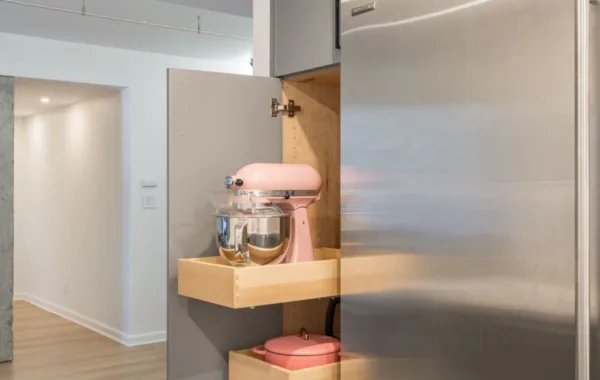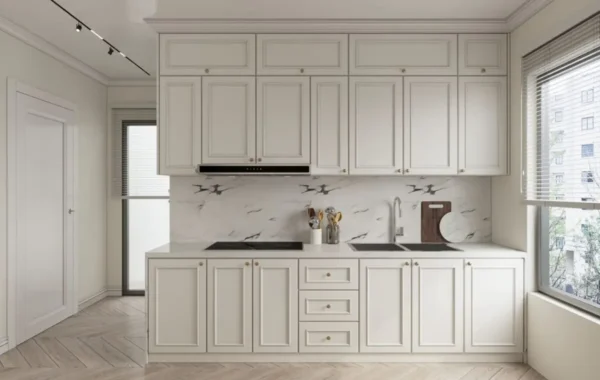



Knobs on cabinet doors and pulls on drawers are a useful starting point—but they are not a rule. The right choice depends on how the hardware feels in your hand, the size of your cabinetry, and the look you want. Using pulls throughout, knobs throughout, or a coordinated mix can all work.
At NYKB, hardware selection is part of the larger kitchen design: cabinetry, appliances, finishes, and everyday use should work together. Here is how to choose knobs and pulls that look right and feel comfortable.
Kitchen Cabinet Knobs vs. Pulls: A Quick Comparison
A knob typically attaches through one hole and offers a compact grip. A pull usually attaches through two holes and provides more space for your fingers. Edge pulls and other specialty designs may install differently.
| Feature | Cabinet Knobs | Cabinet Pulls |
|---|---|---|
| Appearance | A smaller accent; available in traditional and contemporary designs | A stronger visual line; available in modern and traditional designs |
| Common uses | Cabinet doors and smaller drawers | Drawers, tall doors, and wider cabinetry |
| Grip | Requires grasping a smaller surface | Often offers more room for fingers |
| Installation | Typically one mounting hole | Typically two mounting holes with specific spacing |
| Replacement | Usually straightforward when reusing a single hole | Replacement must match existing hole spacing unless holes are repaired |
| Cost | Often less expensive per piece | Often more expensive per piece, depending on size and material |
Neither option belongs exclusively to one kitchen style. A simple knob can suit contemporary cabinetry, while a cup pull can complement a traditional kitchen.
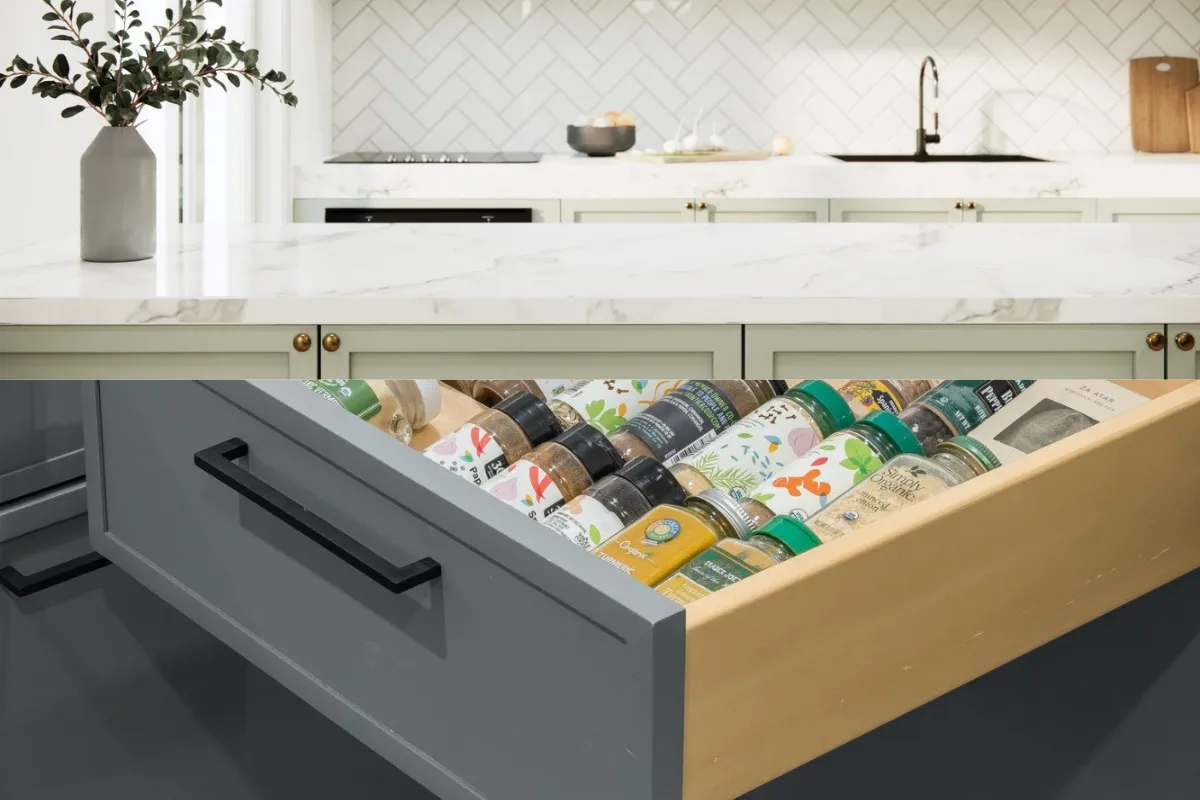
When to Choose Cabinet Knobs
Knobs are worth considering when you want hardware that adds detail without becoming a dominant feature.
They can work well on:
- Upper cabinet doors.
- Smaller cabinet doors and drawers.
- Cabinetry with decorative profiles.
- Kitchens where a subtle hardware accent suits the design.
Before choosing a knob, test its size and projection—the distance it extends from the cabinet. A knob that looks attractive on a sample board may feel too small or sit too close to the door.
Also check the edges. An angular knob may feel different from a rounded one, particularly when opening a frequently used cabinet.
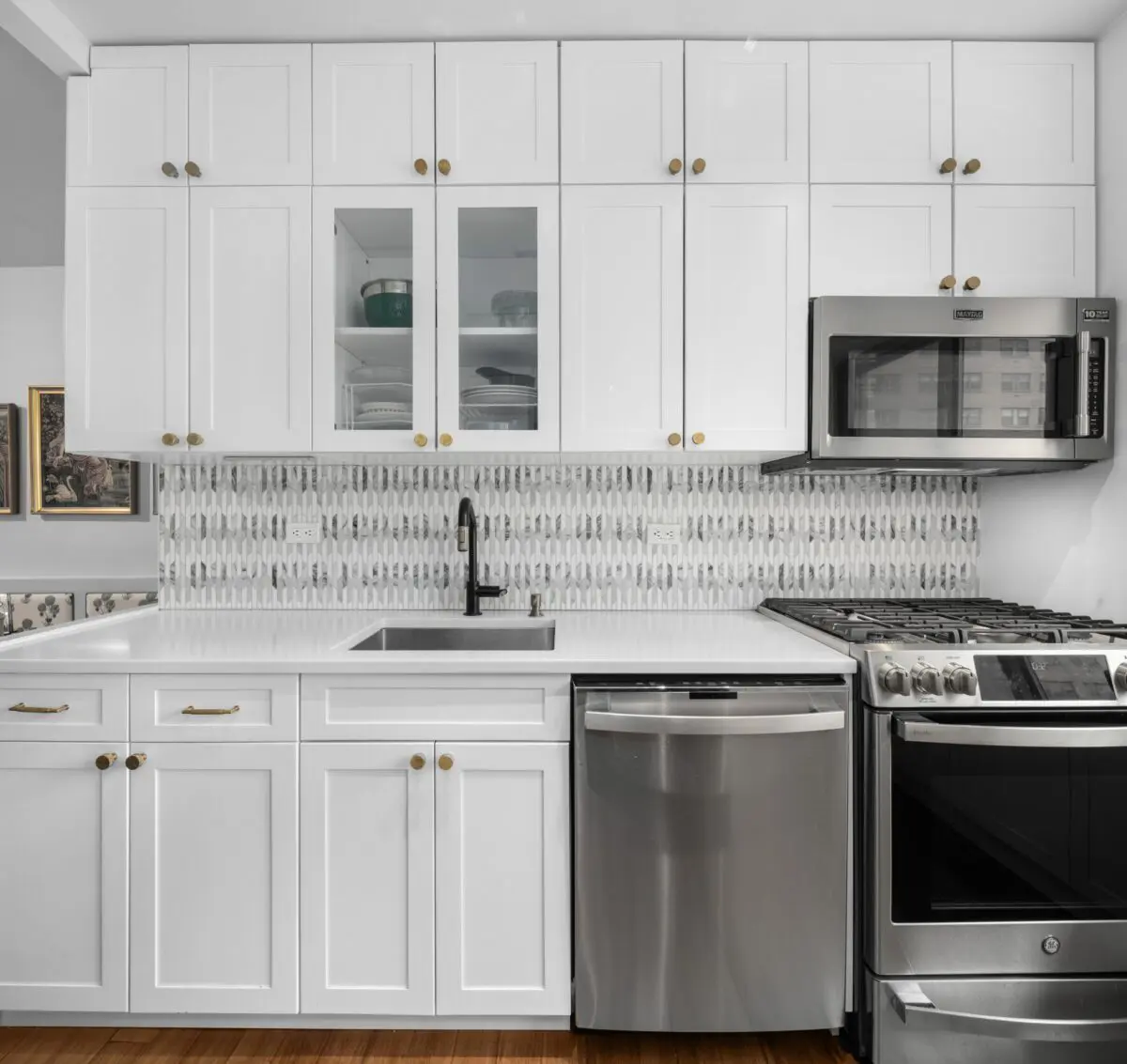
NYKB kitchen remodeling project on Upper East side 87th street
When to Choose Cabinet Pulls
Pulls are a practical option for drawers and larger doors because they often provide a more generous gripping area.
Consider them for:
- Wide drawers holding pots, pans, or dishes.
- Pantry doors.
- Kitchens where a consistent linear detail suits the cabinetry.
- Users who find small knobs uncomfortable to grasp.
The opening behind the pull matters as much as its appearance. Make sure your fingers fit comfortably without scraping the cabinet front.
For integrated refrigerators and dishwashers, use hardware suitable for the appliance and follow the manufacturer’s requirements. A standard decorative cabinet pull may not be appropriate.
Can You Mix Knobs and Pulls?
Yes. Mixing knobs and pulls can make a kitchen feel balanced while matching the hardware to each cabinet’s function.
A straightforward combination is:
- Knobs on cabinet doors.
- Pulls on drawers.
- A coordinating pull on tall pantry doors.
To keep the result cohesive, choose pieces with compatible shapes and finishes. They do not need to be identical, but they should look intentional together.
Test the combination across an entire cabinet elevation rather than judging each piece separately. A kitchen with many small doors can look busy if every piece of hardware competes for attention.
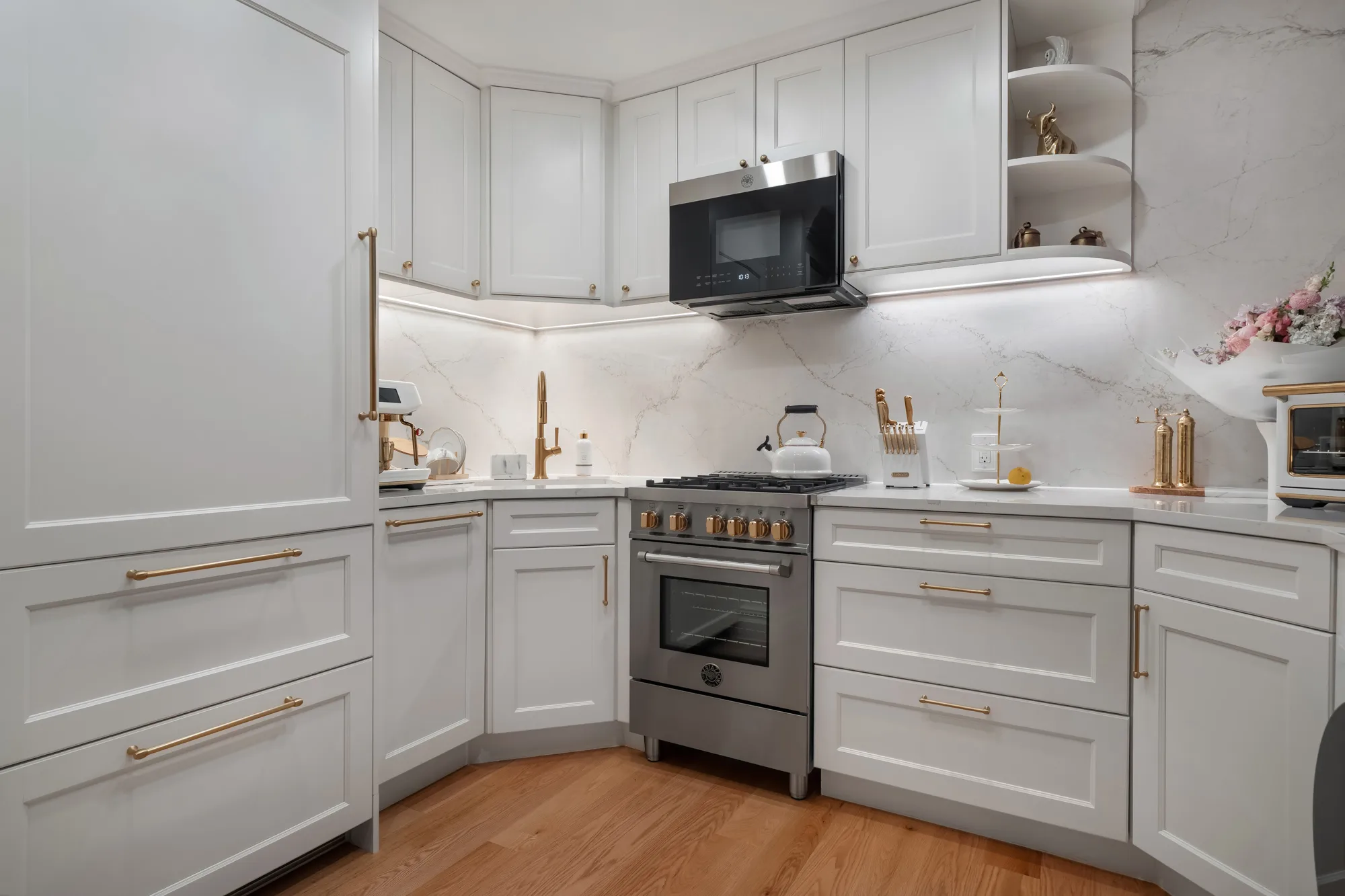
Common Types of Cabinet Pulls
Bar Pulls
Bar pulls have a straight gripping section and can suit many cabinet styles. Some extend beyond their mounting posts, while others have enclosed or returned ends.
Check exposed ends near walkways and work areas: certain designs can catch pockets, sleeves, or apron ties.
Cup Pulls
Cup pulls have a curved shape that you grip from underneath. They are commonly used on drawers and can bring a traditional or transitional detail to the kitchen.
Try them on a sample drawer before committing. The opening and finger clearance vary between models.
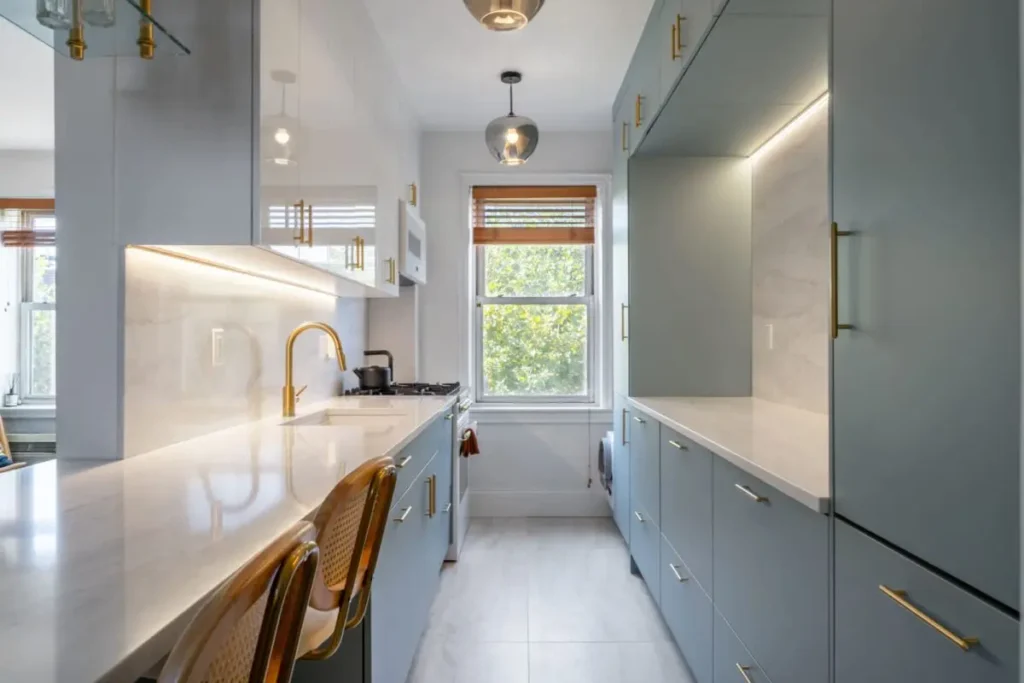
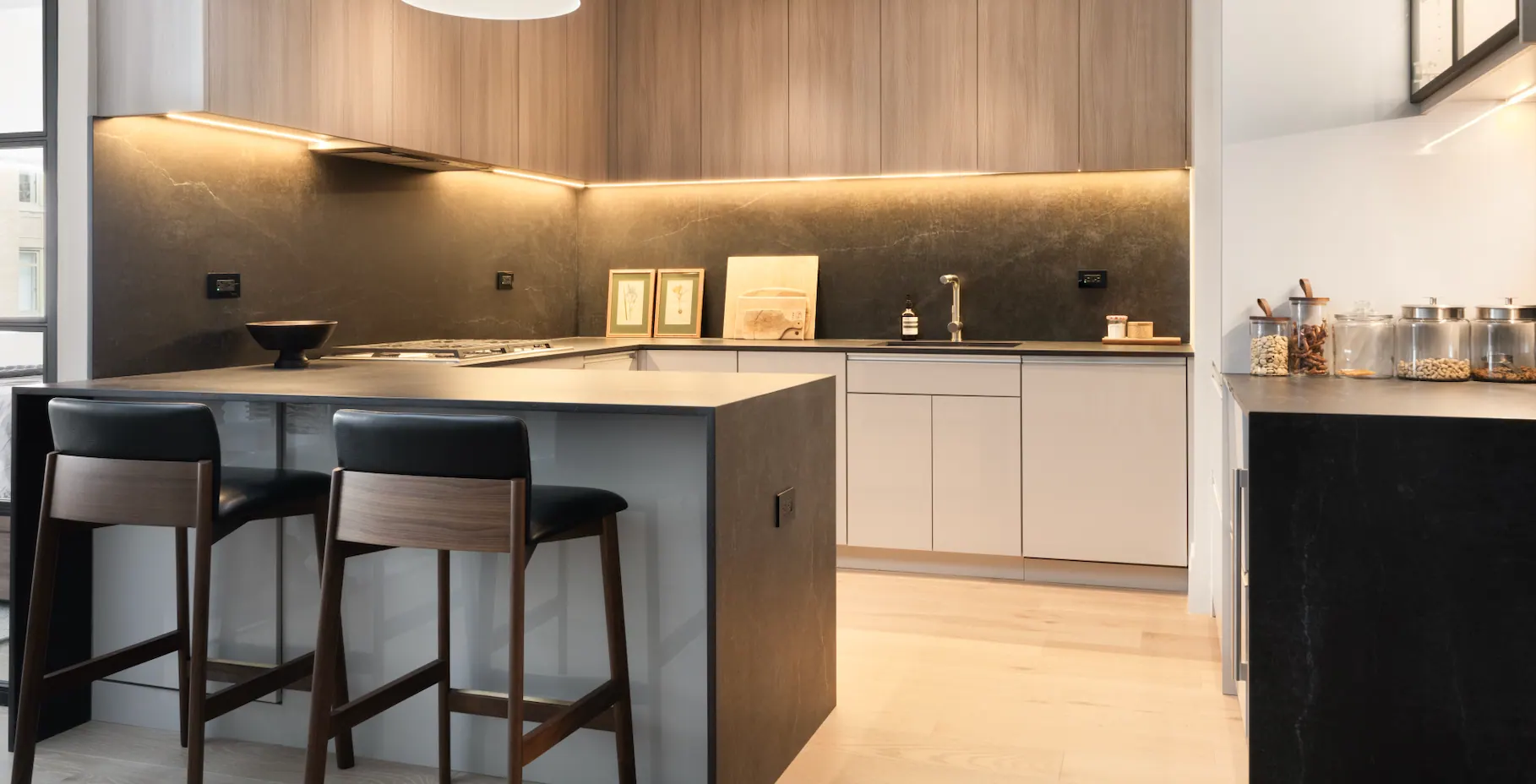
Edge and Finger Pulls
Edge pulls attach at or near the edge of the cabinet front, creating a quieter visual detail. Some finger-pull designs are integrated into the cabinetry itself.
Confirm compatibility with the cabinet construction, countertop overhang, and nearby doors before selecting them.
Bail Pulls
Bail pulls have a hinged handle that lifts away from the cabinet front. They can add a furniture-like detail to traditional cabinetry.
They are decorative hardware, not a substitute for child-safety locks.
How to Choose the Right Hardware Size
Start with the cabinet or drawer dimensions, then consider comfort and proportion.
A small pull may look lost on a wide drawer. A large pull may overwhelm a narrow door. However, there is no single sizing formula that works for every kitchen.
Before ordering:
- Measure existing holes. For replacement pulls, measure from the center of one mounting hole to the center of the other. Overall pull length is a different measurement.
- Compare samples on the cabinet front. Use removable tape or a template to visualize placement.
- Test the grip. Check finger clearance and whether the edges feel comfortable.
- Check neighboring surfaces. Open doors and drawers to identify potential contact with walls, appliances, or adjacent hardware.
- Confirm the final placement before drilling. Repairing an incorrectly drilled finished cabinet can be difficult.
Wide drawers may use one longer pull or two smaller pulls, depending on their construction and design. Review the choice with your cabinet supplier or installer.
For more detail on hardware dimensions and proportions, see Top Knobs’ cabinet hardware sizing guide.
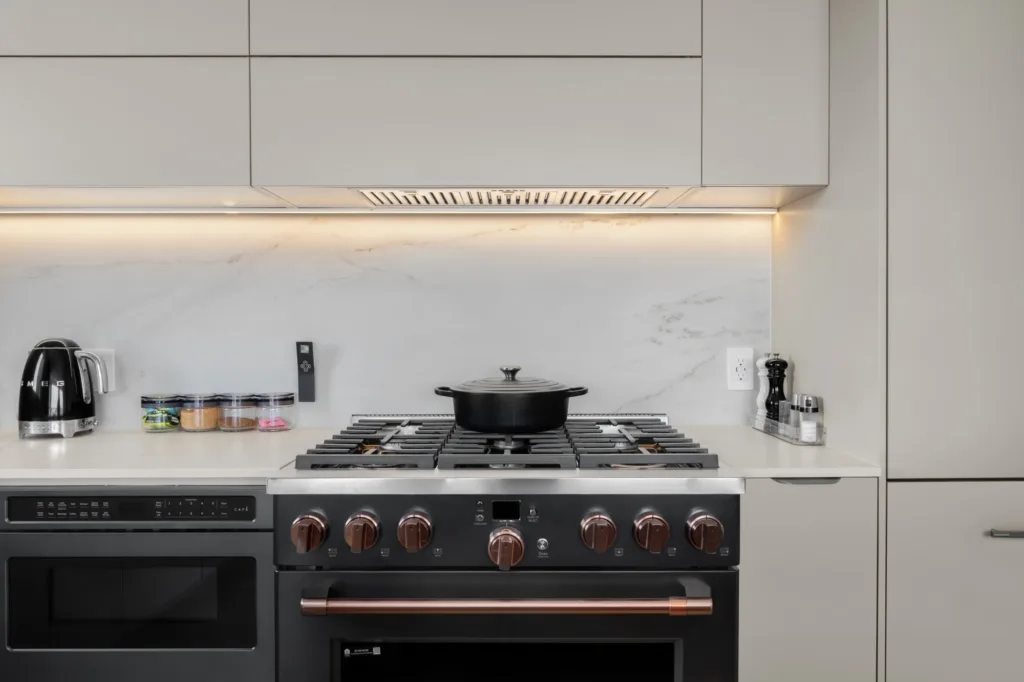
Should Hardware Match the Faucet and Appliances?
Matching finishes is one way to create consistency, but an exact match is not essential.
Consider the hardware alongside:
- Cabinet color and door style.
- Faucet finish.
- Lighting.
- Visible appliance handles.
- Countertops and backsplash.
Compare physical samples together when possible. Finishes with similar names can vary between manufacturers, especially brushed brass, bronze, and nickel.
If you mix metals, give the combination a clear purpose. For example, the cabinet hardware might coordinate with the lighting while the faucet relates to stainless-steel appliances.
Practical Details to Check Before You Buy
Look for Comfortable Clearance
Choose hardware that lets you open the cabinet without rubbing your fingers against the finish. Good clearance can reduce repeated contact with the cabinet front, although no hardware style prevents all wear.
Test for Snagging
Check projecting knobs and open-ended pulls near narrow walkways, corners, and frequently used work areas.
Think About Cleaning
Detailed grooves and textured surfaces can require more cleaning than simpler shapes. Consider how accessible the area behind the hardware will be.
Plan for Everyday Use
Test samples with the people who will use the kitchen. If small knobs are difficult to grasp, a pull with adequate clearance may be more comfortable.
Confirm Quality and Compatibility
Check the finish, mounting screws, cabinet-front thickness, and installation requirements. Price alone does not establish durability.
See Hardware in a Finished Kitchen
Hardware is easier to judge when you can see how it relates to the whole room.
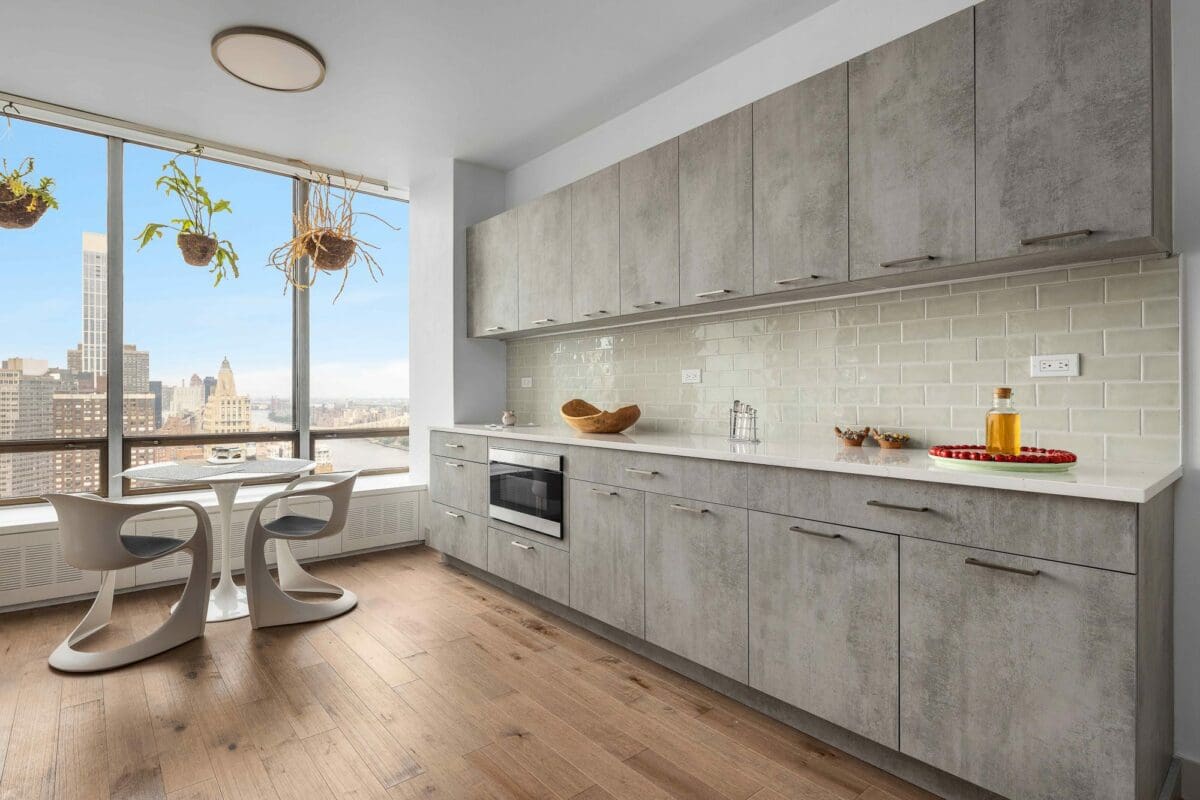
Explore NYKB’s United Nations Plaza project and other completed kitchens in our project portfolio. Look at the relationship between the cabinetry, hardware, appliances, and surrounding finishes.
Frequently Asked Questions
Should I use knobs or pulls on kitchen cabinets?
Either can work. Knobs on doors and pulls on drawers are a useful starting point, but comfort, cabinet size, and the overall design should guide the final choice.
Can I use pulls on every cabinet?
Yes. Pulls on both doors and drawers can create a consistent appearance. Check sizing and placement across the whole kitchen before ordering.
Are knobs cheaper than pulls?
Knobs often cost less per piece, but material, finish, manufacturer, and size can change the comparison. Price the complete hardware schedule rather than comparing only two individual pieces.
Can I replace knobs with pulls?
Often, but new holes may be needed. Whether an existing hole can be reused depends on the pull and its placement. Check the layout before drilling.
Do cabinet pulls need to be the same length?
No. Coordinated lengths can suit different drawer and door sizes. Aim for consistent proportions rather than forcing one size onto every cabinet.
Choose Hardware as Part of Your Kitchen Design
The best cabinet hardware supports the way you use your kitchen and complements the cabinetry around it.
NYKB brings 25 years of NYC renovation experience to kitchen remodeling and cabinetry selection. Our team can help coordinate hardware with your cabinet layout, materials, and finishes.
Schedule a free consultation to discuss your kitchen renovation.