
Kitchen Space Saving Ideas are essential for small NYC kitchens, where every inch has to work harder than it would in a typical home. In many New York apartments, kitchens are narrow, tucked into corners, or designed long before modern storage and appliance needs existed. The challenge is not just fitting everything in, but creating a space that feels open, functional, and comfortable to use every day.
When planned thoughtfully, small kitchens can feel efficient rather than cramped. The most successful designs focus on layout, smart storage, and visual flow instead of simply adding more cabinets. That is where the right kitchen space-saving ideas make the biggest difference.
Start With How the Kitchen Functions, Not How It Looks
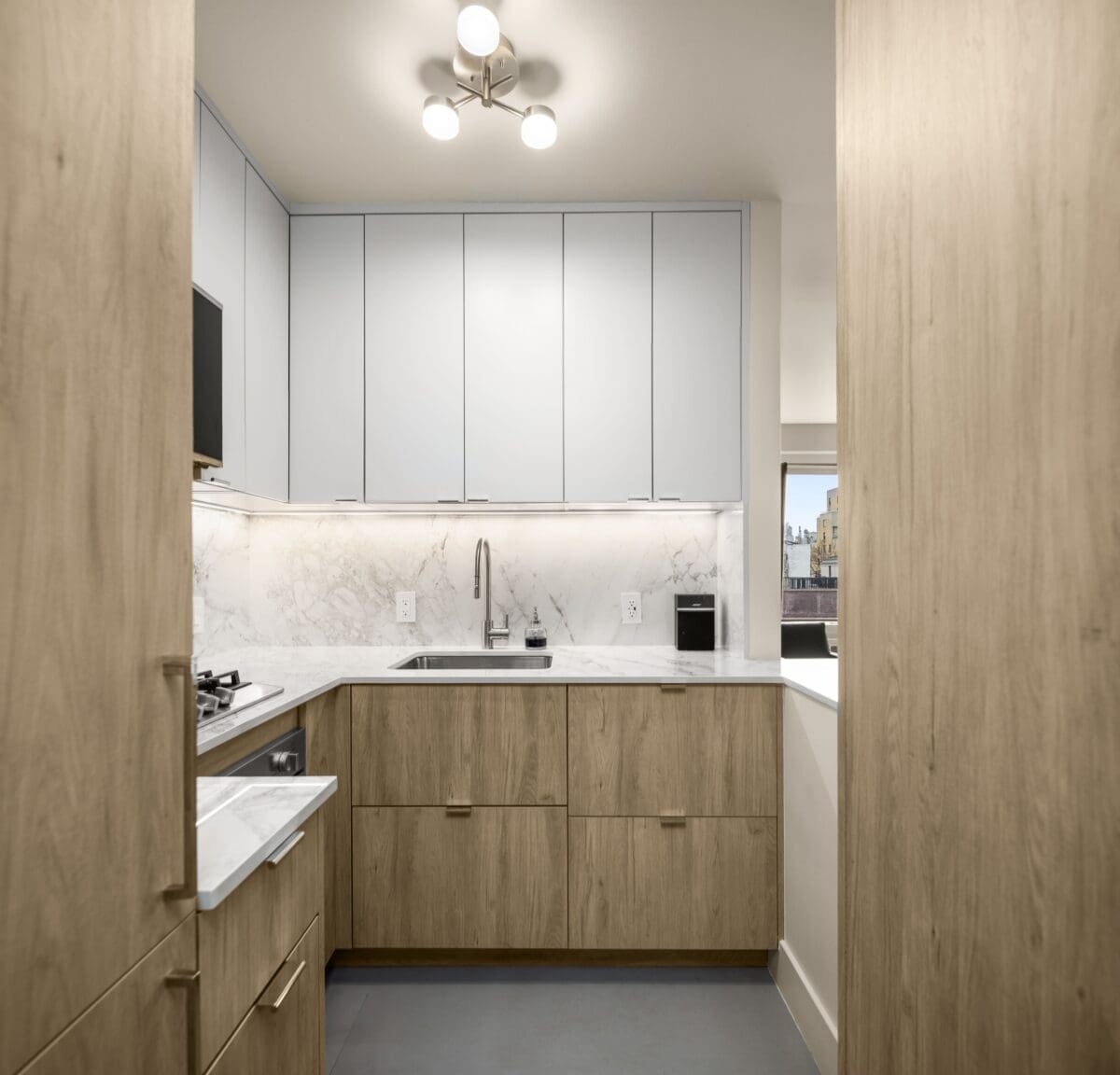
When remodeling a kitchen in NYC, before thinking about storage solutions, finishes, or appliances, it helps to step back and look at how the kitchen is used day to day. In small apartments, circulation matters just as much as storage. A layout that looks great on paper can feel frustrating if walkways are tight or doors collide when opened.
Many NYC kitchens fall into familiar categories such as galley kitchens, single-wall layouts, or compact L-shaped plans. Each of these can work beautifully when proportions are respected. Sometimes improving a kitchen means removing something rather than adding to it, such as eliminating a bulky cabinet run or adjusting appliance placement to improve flow.
In some apartments, opening the kitchen slightly can make the space feel larger. In others, keeping it defined actually creates a calmer and more functional environment. Space saving always starts with choosing the right layout for the apartment rather than following trends.
Using Vertical Space Without Making the Kitchen Feel Heavy
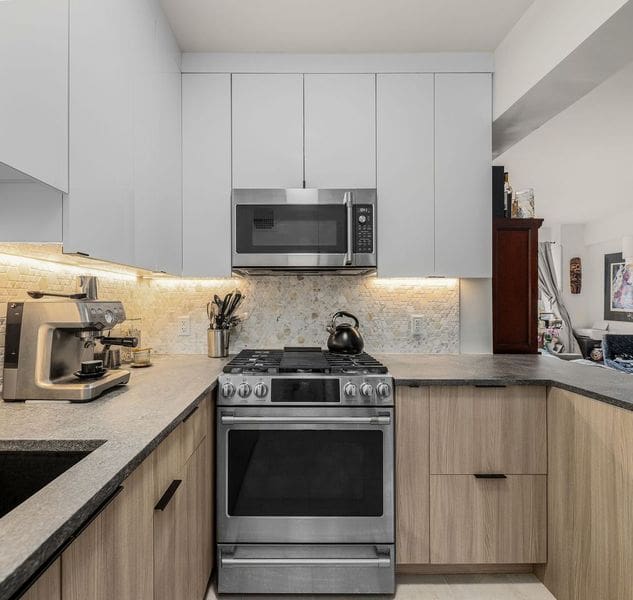
One of the biggest advantages in small kitchens is height. Tall cabinetry can dramatically increase storage, but it needs to be done thoughtfully. Floor-to-ceiling cabinets work best when their proportions feel intentional and not overpowering. Clean lines, lighter finishes, and integrated hardware help tall cabinets feel architectural rather than bulky.
Shallower upper cabinets are another smart way to gain storage without overwhelming the room. They provide space for everyday items while keeping sightlines open. Open shelving can also work when used selectively, especially for items that are used often and look good on display. The goal is to let the kitchen breathe while still being practical.
Hidden Storage Is Where Small Kitchens Really Win
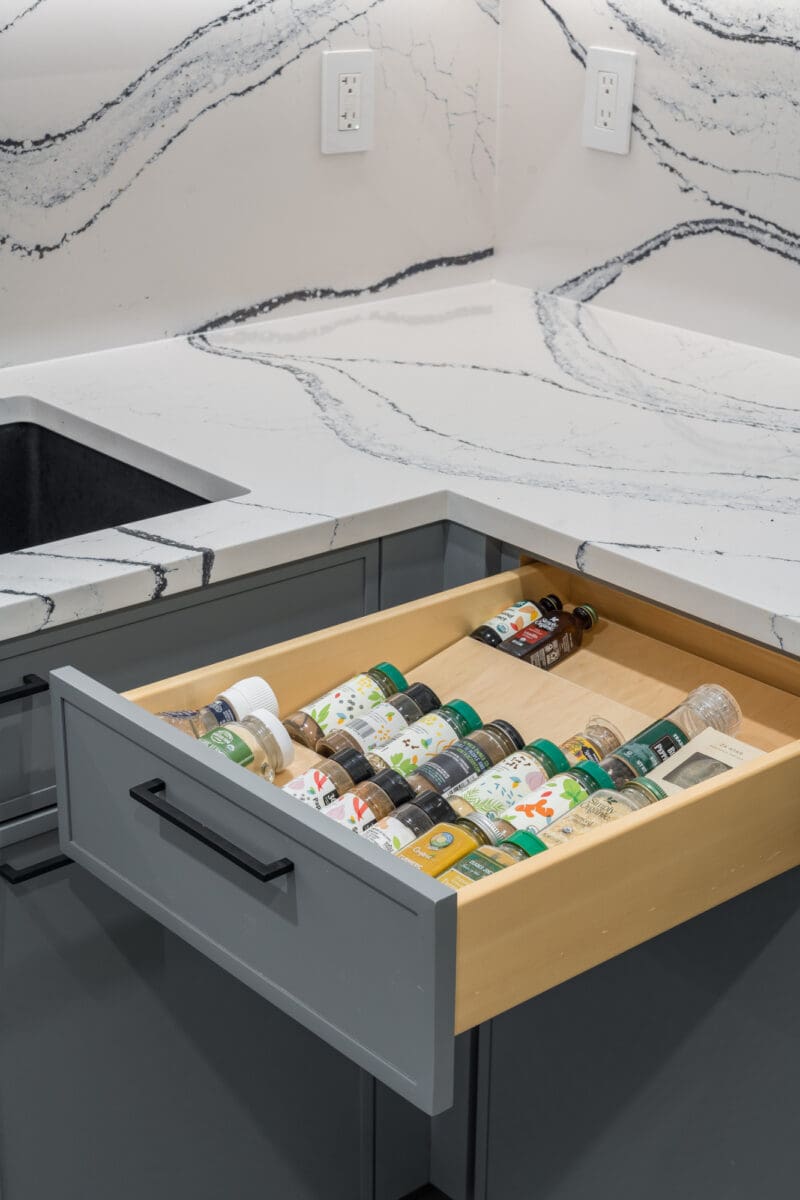
Some of the most effective space-saving solutions are the ones you barely notice. Pull-out pantries make use of narrow gaps that would otherwise be wasted. Corner cabinets can be transformed from awkward dead zones into highly functional storage with the right internal systems. Toe kick drawers add usable space in areas most people overlook entirely.
Built-in trash and recycling, appliance garages, and integrated organizers reduce visual clutter and free up countertop space. In a small kitchen, what you do not see is just as important as what you do.
Multi-Functional Design Makes a Big Difference
When space is limited, every element should work harder. Panel-ready appliances are a great example. By blending refrigerators and dishwashers into the cabinetry, the kitchen reads as a cohesive space rather than a collection of parts. This visual simplicity makes the room feel larger and calmer.
Slim-depth appliances, integrated microwave drawers, and thoughtfully sized ranges can also free up valuable inches. Even seating can become part of the solution when benches or banquettes include hidden storage below.
In New York City apartments, layout decisions are often influenced by building regulations and structural limitations, which is why understanding general renovation guidelines published by the NYC Department of Buildings can be helpful early in the planning stage.
Flooring and Visual Flow Can Make a Small Kitchen Feel Larger
In NYC apartments, kitchens rarely exist in isolation. They often connect directly to living or dining areas, and flooring plays a major role in how spacious the kitchen feels. Using the same flooring throughout adjacent rooms can visually expand the kitchen and create a sense of continuity.
Choosing durable, apartment-friendly flooring that works across spaces is especially important in small homes. If you want to explore how flooring choices affect flow and functionality in NYC apartments, this kitchen flooring guide for NYC homes goes deeper into what works best and why.
Light and Sound Shape How We Experience Space
Lighting is one of the most overlooked space-saving tools. Poor lighting creates shadows that make kitchens feel smaller and more cramped. Layered lighting, including under-cabinet lighting and well-placed ceiling fixtures, can dramatically change how a small kitchen feels without changing its footprint.
Sound is another factor that becomes more noticeable in compact apartments, especially in open or semi-open kitchens. Appliances, ventilation, and even cabinet construction can affect how noise travels. When kitchens open into living areas, addressing sound thoughtfully can improve comfort just as much as adding storage. This is where ideas discussed in soundproofing NYC apartments become relevant, even during kitchen planning.
Avoiding Space Killing Mistakes
Small kitchens leave very little room for error. Oversized appliances, too many drawers, or ignoring clearance requirements can quickly make a kitchen feel cramped. Choosing finishes that are too dark or too busy can visually shrink the space,e even if storage is technically improved.
Another common mistake is designing only for how the kitchen looks on day one rather than how it will function years later. Space saving is not just about fitting everything in, but about ensuring the kitchen remains comfortable and flexible over time.
Why NYC Kitchens Require Extra Planning
Many space-saving ideas sound simple until they meet the reality of NYC apartments. Plumbing locations, electrical capacity, building rules, and alteration agreements can all influence what is actually possible. Understanding these constraints early helps avoid redesigns, delays, and compromised layouts later on.
This is why thoughtful planning matters so much in small kitchens. Good ideas are important, but understanding how those ideas fit within the unique structure of a New York apartment is what turns them into successful results. For a deeper look at how behind-the-scenes coordination affects renovation outcomes, this article on the hidden role of licensed general contractors in NYC offers helpful context.
Small Kitchens Work Best When They Are Thoughtfully Planned
A small kitchen does not need to feel tight or limited. When layout, storage, materials, lighting, and planning work together, the space can feel efficient, intentional, and even generous. The most successful NYC kitchens are not the biggest ones. They are the ones designed with care, clarity, and an understanding of how people actually live.
Smart space saving is never about tricks. It is about making informed decisions that respect the apartment, the building, and the people who use the kitchen every day.