
Choosing kitchen cabinets isn’t about learning what types exist, it’s about matching the right choice to your budget, timeline, kitchen layout, and how you use the space. Cabinets are also one of the few kitchen decisions that touch nearly every other trade on the job: electrical, plumbing, flooring, even drywall so getting the sequence right matters as much as getting the style right.
This guide walks through the decisions in the order they actually come up on a real renovation, drawn from what we cover with clients at NYKB every project, so by the end you’ll know exactly what to ask for, whether you’re working with a showroom, a designer, or an all-in-one team handling the whole project.
Schedule Your Free Consultation
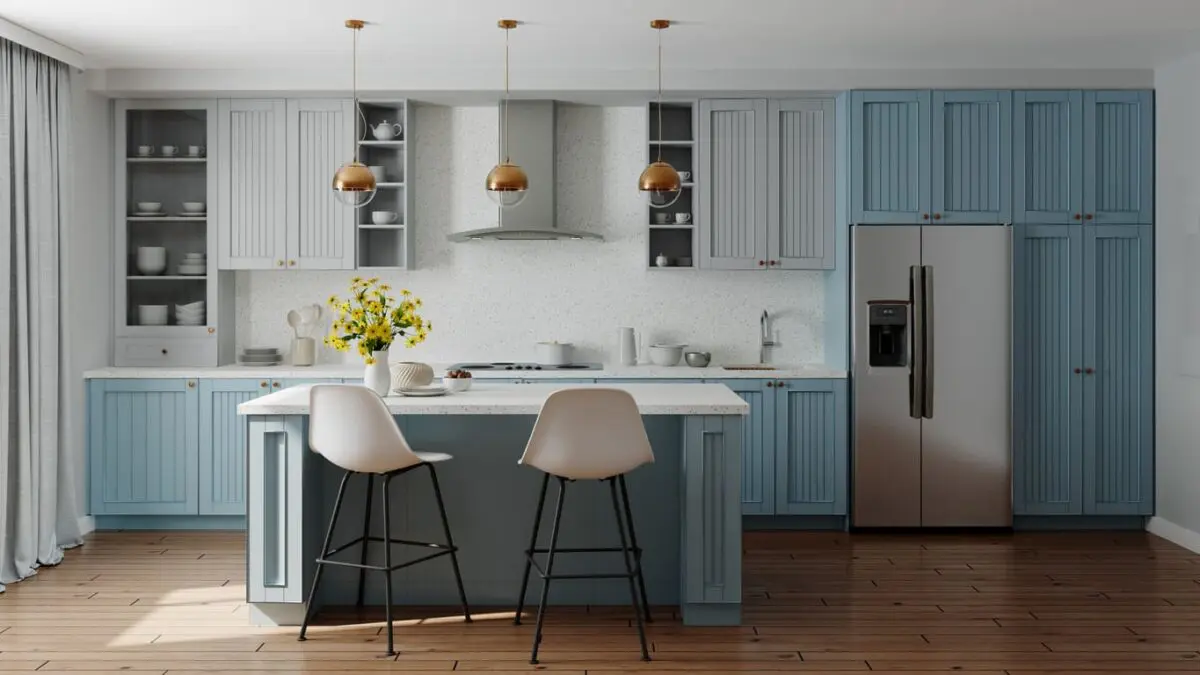
Stock, Semi-Custom, or Custom
This determines whether you should be shopping for stock, semi-custom, or custom cabinets and it’s worth deciding first because it filters out most of your other options. Our Manhattan showroom organizes its product lines the same way the Comparing Cabinet Lines and Tiers section covers how to compare specific lines once you know which category you’re in.
- Stock cabinet: Your timeline is tight (2-5 weeks), your kitchen is a standard size/shape, and budget is a top priority. You’ll trade some flexibility in sizing and finish for speed and cost savings.
- Semi-custom: You have a somewhat typical layout but want more say over finishes, sizing, or storage add-ons, and can wait 5-9 weeks. This is the right call for most renovations, it balances flexibility and cost without the full custom price tag.
- Custom: Your kitchen has an unusual layout, you have a specific design vision, or you’re planning to stay in the home long enough that the investment pays off. Expect 8-12+ weeks and the highest cost per linear foot.
One thing worth flagging early: in a co-op or condo building, the cabinet lead time is rarely the thing that actually controls your schedule board approvals and building access windows usually are (more on this in the co-op section). It’s worth confirming both timelines before locking in a cabinet order, so you’re not stuck holding custom cabinets while waiting on paperwork, or vice versa.
If you’re not sure which bucket you’re in, ask yourself: would a standard-sized cabinet actually fit and function in my kitchen? If yes, you likely don’t need custom.
Framed vs. Frameless
This is the storage-versus-style trade-off, and it’s a genuine trade-off, not just an aesthetic pick.
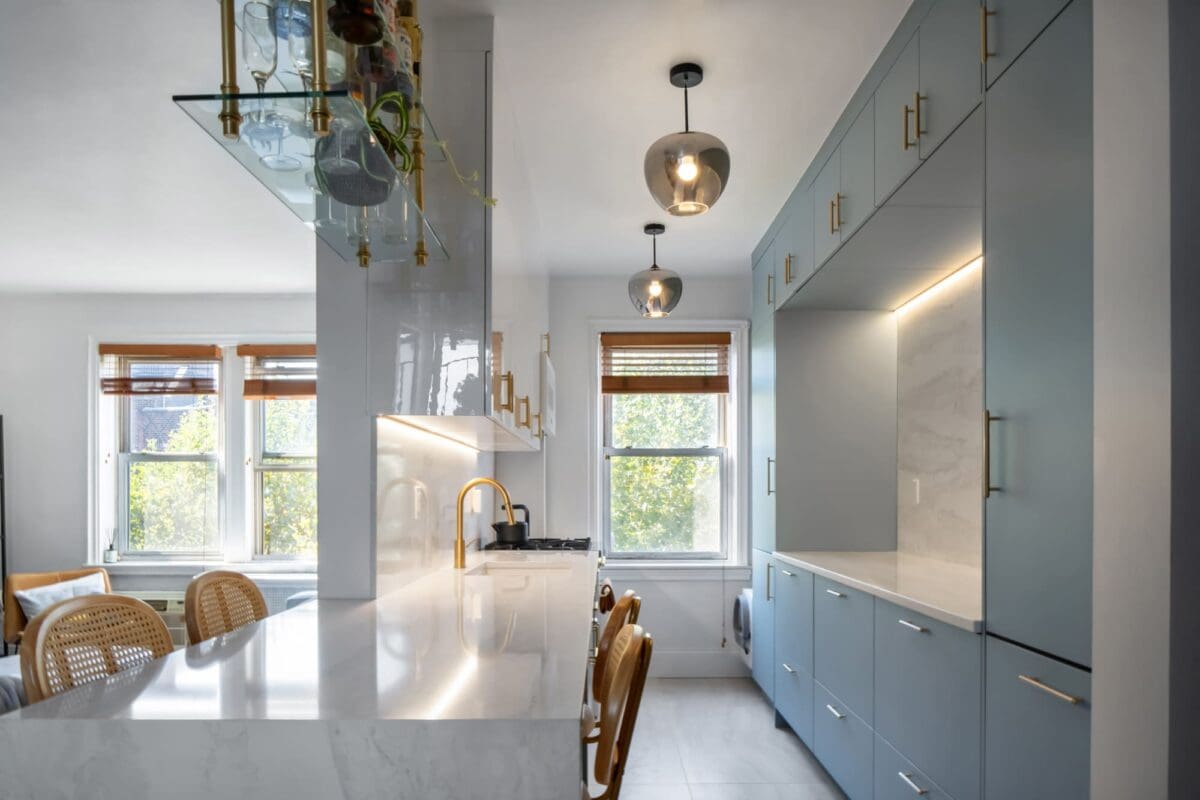
- Frameless (full-overlay): No face frame means doors and drawers cover more of the opening, which translates to a bit more usable space inside each cabinet. It’s the modern, clean-lined option, and the natural choice if maximizing storage is a priority for you.
- Framed: These have a classic, traditional look, and the face frame does more than add style, it gives the cabinet extra structural support, making the whole thing slightly sturdier. A solid option if storage isn’t the main concern for you and a timeless aesthetic matters more.
In smaller New York kitchens, frameless tends to win out simply because every inch of storage counts more than it would in a larger suburban layout. If storage is tight, lean frameless. If style and a classic look matter more to you than an extra inch of shelf depth, framed is fine.
Take a look at our Queens kitchen remodeling project, where satin-finished frameless cabinets with integrated panels came together for a clean, contemporary feel.
Choosing a Material
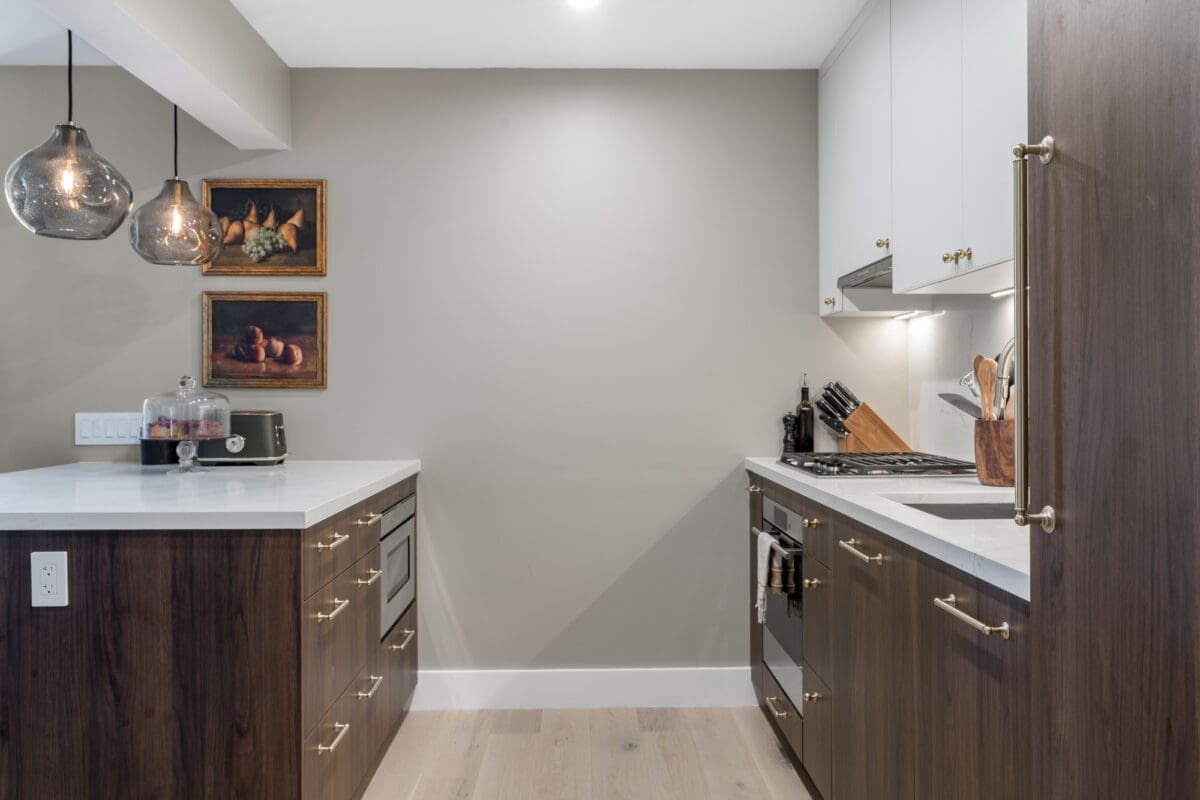
This decision comes down to your priority: upfront cost, long-term durability, or low maintenance.
- Prioritize durability and the ability to refinish later? Choose solid wood (maple, oak, cherry, birch). Costs more upfront but can be repainted or refinished years down the line instead of replaced.
- Prioritize a smooth, paintable surface on a tighter budget? Choose MDF (Medium-Density Fiberboard). It takes paint very well but is more vulnerable to moisture and impact than wood, so it’s a better fit for lower-traffic areas or if you’re comfortable with that trade-off.
- Prioritize low maintenance and moisture resistance above all? Choose laminate. It’s the most affordable and easiest to keep clean, but you lose the ability to refinish it when it wears out, you replace it rather than restore it.
- Building the cabinet boxes themselves (not just the doors)? Plywood is a strong, moisture-resistant choice often used regardless of what material you pick for the visible doors.
Older buildings are worth a specific mention here: pre-war construction often runs humid, especially in kitchens without great ventilation, and that pushes the moisture-resistance question higher up the priority list than it might be in a newer building
Choosing a Finish
This determines your finish, which is really a maintenance decision disguised as a style one.
- Busy household, lots of hands on the cabinets? Stained finishes hide daily wear and fingerprints better than paint.
- Want maximum color flexibility and a clean, modern look, and don’t mind occasional touch-ups? Painted finishes give you the widest color range but show chips and wear more visibly over time.
- Want to basically never think about upkeep? Laminate finishes resist moisture and stains with minimal effort, at the cost of some texture and depth compared to wood.
Storage Accessories Worth Adding
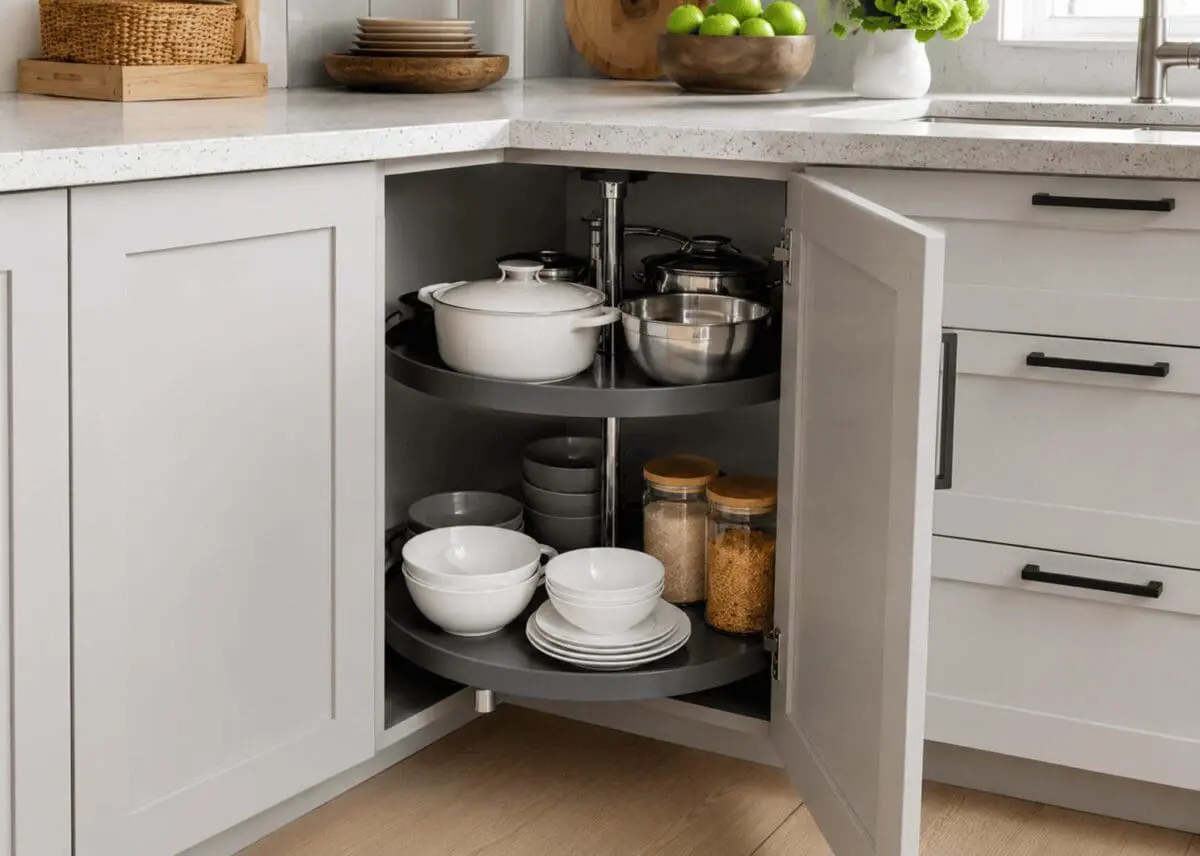
Don’t pick accessories because they sound nice, pick them for the specific frustration you have with your current kitchen. This is also where smaller footprints matter most: in a compact galley or one-wall kitchen, the right accessory does more for daily function than almost any other single choice.
- Struggling with corner cabinets you never really use? A lazy Susan solves exactly that problem.
- Tired of digging through the back of deep cabinets? Pull-out shelves and drawers bring items to you instead.
- Are spices and small items always a mess? Built-in spice racks and dividers are worth the add-on cost.
- Cabinets and drawers slamming or wearing out fast? Soft-close hinges and glides are increasingly worth treating as standard rather than optional.
- Want drawers that hold up under heavy daily use? Ask specifically about dovetail drawer construction; it outlasts stapled or nailed drawer boxes.
Comparing Cabinet Lines and Tiers
Manufacturers typically split their offerings into tiers, and understanding the tiers is more useful than comparing individual model names, which vary by supplier:
| Your Priority | Best Fit | Why |
| Speed and lowest cost | Stock / entry lines | Limited sizing and finish choices, but fastest turnaround |
| Balance of flexibility and cost | Mid-tier / semi-custom lines | Expanded sizing, finish, and storage options without custom pricing |
| Full design control | Premium / custom lines | Fully custom sizing and materials for unique layouts or high-end finishes |
The tiers above are consistent across the industry even when the branding isn’t. At NYKB, we’re one team with everything under one roof, design, cabinetry, and installation, so we work with these manufacturer lines directly and can usually place any given line into one of these three buckets right away, saving you the trouble of cross-shopping unfamiliar names.
Living in a Co-op or Apartment?
If you’re in a New York apartment or co-op, these constraints deserve to be locked in before you finalize anything they affect what you choose, not just how it’s installed:
- Tight layout? Prioritize smart storage solutions (pull-outs, vertical storage, corner solutions) over sheer cabinet volume you likely need function-dense cabinets more than large ones.
- Co-op or condo? Renovation approval and alteration agreements can take weeks to clear the board, and buildings often restrict work to specific hours or days. This step routinely ends up being the actual critical path on the schedule, not the cabinet lead time from the stock vs. semi-custom vs. custom section.
- Walk-up or narrow hallways? A delivery and staging plan needs to be confirmed before cabinets arrive, not after. Custom cabinets are typically built off-site and delivered in specific pieces, while stock cabinets are often easier to move in stages in a walk-up, that difference can matter more than style or price.
- Elevator buildings? Freight elevator reservations usually need to be booked with the building well in advance, and missing that window can stall a delivery by days even when everything else is on schedule.
How Installation Fits Your Renovation Schedule
Cabinet installation touches nearly every other trade on the job, electrical for lighting and outlets, plumbing for sink cabinets, flooring, and sometimes drywall. Getting that sequence wrong is one of the most common (and most expensive) mistakes in a kitchen renovation.
This is where working with a single company makes the biggest difference. At NYKB, our experts oversee design, cabinetry, and installation together, so everything is coordinated internally instead of you juggling separate vendors and hoping their timelines line up. When cabinets are ready to go in, whatever needs to happen before or after is already accounted for.
Custom cabinets especially require precise on-site adjustments, and our installers’ experience across stock, semi-custom, and custom lines means those details get done right the first time.
Because we manage the full process in-house rather than handing off between separate companies, we’re able to catch issues early, before they turn into delays or costly rework.
Maintaining Your Cabinets Long-Term
Your maintenance routine should match the choice you made in the finish section:
- Painted cabinets: wipe with a soft, damp cloth; avoid abrasive cleaners that dull or scratch the finish
- Stained wood cabinets: occasional conditioning or oiling helps prevent drying and cracking
- Laminate cabinets: mild soap and water is usually enough
With reasonable care, quality cabinets last 20+ years but the “reasonable care” required is different for each material, so make sure your choice matches your actual willingness to maintain it. In older buildings with less consistent humidity control, that maintenance gap tends to show up faster, which is another reason the material decision is worth taking seriously rather than picking on looks alone.
Frequently Asked Questions About Kitchen Cabinets
How long do kitchen cabinets last? Well-built cabinets typically last 20 years or more with proper care, though hardware and finishes may need updating sooner; hinges and soft-close mechanisms are usually the first things to need attention.
How much do custom cabinets cost compared to stock? Custom cabinets cost significantly more, reflecting made-to-order sizing and materials but stock cabinets can still look high-quality when paired with good hardware and installation.
Can I reface cabinets instead of replacing them? Yes. If your cabinet boxes are structurally sound, refacing (new doors, drawer fronts, and hardware on the existing boxes) refreshes the look at a lower cost than full replacement. Worth having someone assess the boxes in person first, since box condition is what actually determines whether refacing makes sense.
How do I measure my kitchen for new cabinets? Measure wall lengths, ceiling height, and the location of plumbing, electrical, and appliances. Having a professional confirm measurements before ordering small errors creates major installation issues, especially in older buildings where walls are rarely perfectly square.
Final Thoughts
The right cabinets aren’t the ones with the most features, they’re the ones that match your timeline, your budget, and the specific way you use your kitchen. Work through the decisions above in order, and you’ll walk into a showroom or design consultation already knowing what to ask for, rather than trying to absorb every option on the spot.
It’s exactly the kind of guidance our team specializes in. Helping New York homeowners navigate these choices based on real kitchen layouts, not just catalog specs. If you’re ready to turn these decisions into an actual plan, reach out to NYKB for a design consultation and get expert input tailored to your space.